736 Granville Street, Vancouver
Vancouver Block
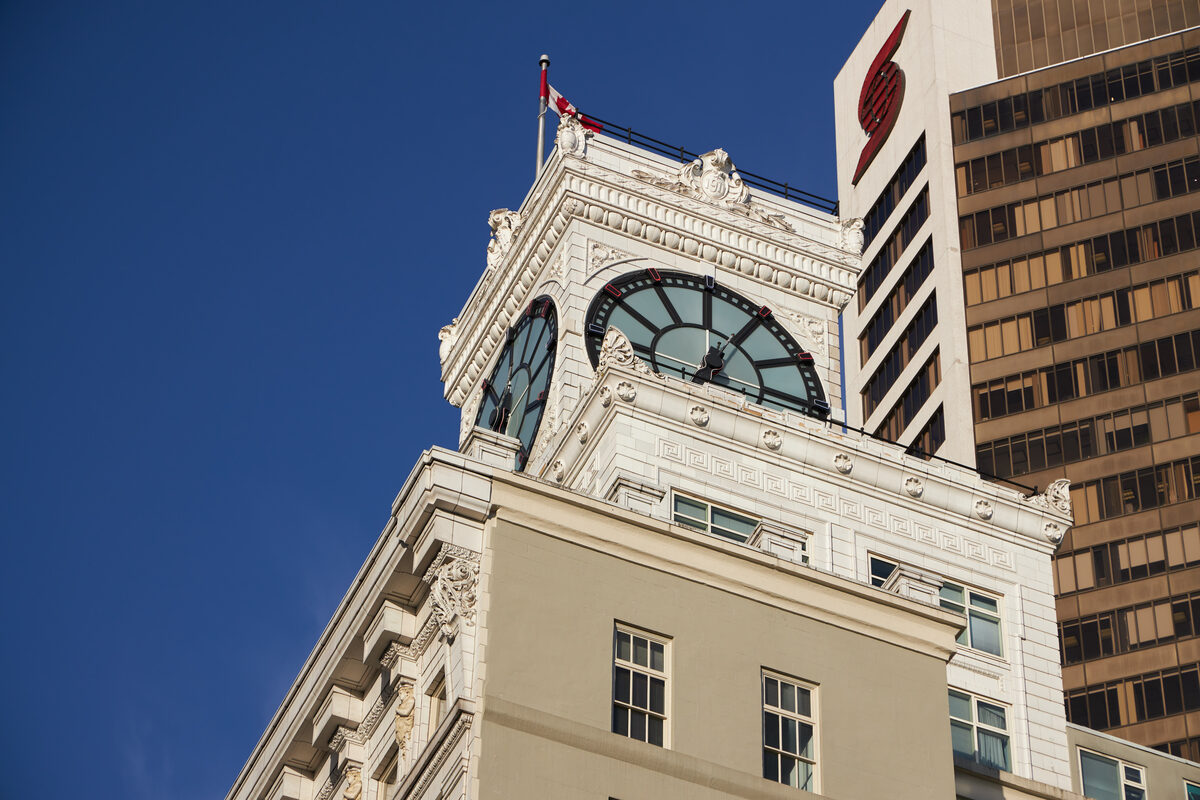
A clock above Granville. A landmark of enterprise, architecture, and civic memory since 1912.
The Landmark
A Building That Shaped a Skyline
Fifteen storeys of ambition, terracotta, and civic memory.
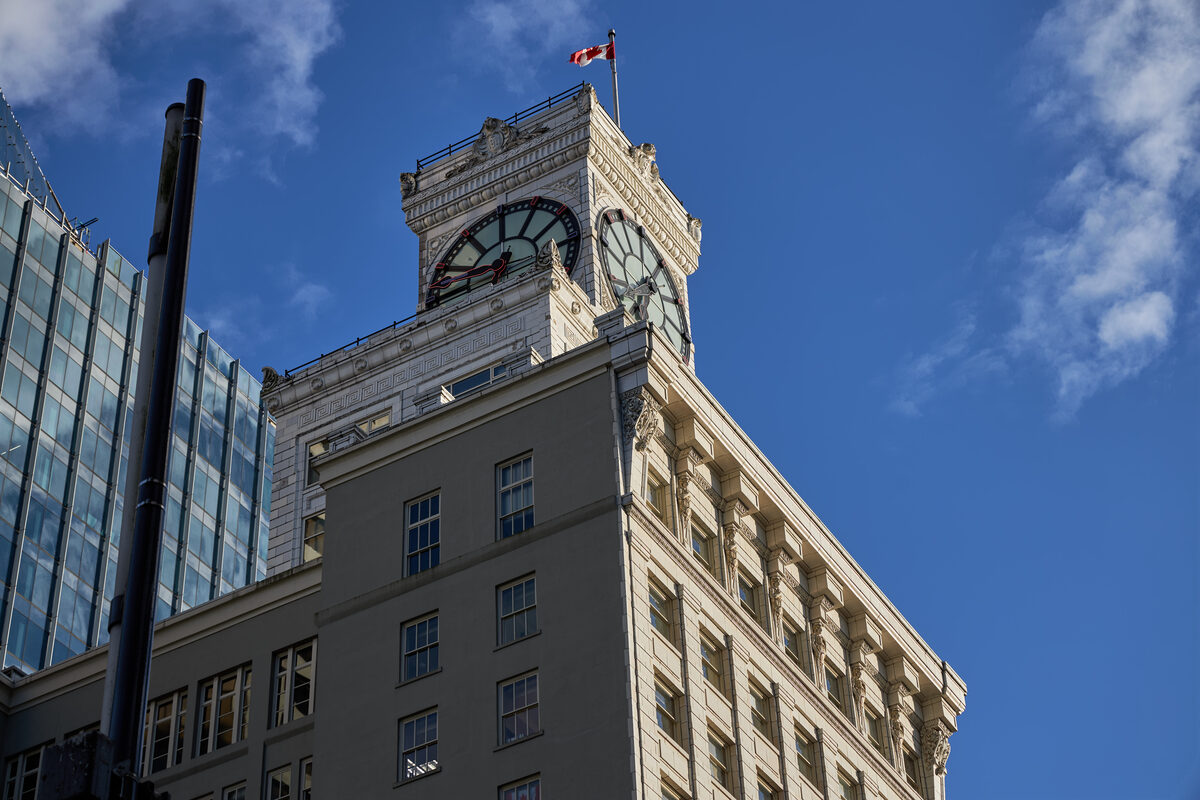
Vancouver Block stands at the corner of Granville and Georgia Streets, one of the most significant intersections in the commercial history of western Canada. Completed in 1912 and rising fifteen storeys above the sidewalk, the building was among the tallest in the city at the time of its opening. Its four-faced clock tower, visible from blocks away, quickly became one of Vancouver's most recognizable public markers -- a meeting point, a wayfinding landmark, and a symbol of the young city's rapid growth.
Commissioned by entrepreneur Dominic Burns and designed by the prominent Vancouver architectural firm Parr & Fee, Vancouver Block is a defining example of the Edwardian Commercial style that shaped the city's downtown core during the pre-war construction boom. Its steel-framed structure, clad in pale terracotta and capped by an ornamental cornice and clock mechanism, expressed the confidence of a city that had grown from a frontier mill town to a major Pacific port in scarcely two decades.
Today, Vancouver Block holds Class A heritage status on the Vancouver Heritage Register and is listed on the Canadian Register of Historic Places. Its marble lobby, terrazzo floors, and original oak panelling survive as evidence of the quality of materials and craftsmanship that characterized commercial construction in early twentieth-century Vancouver.
Explore
One Building.
Many Stories.
Vancouver Block is a place where architecture, enterprise, heritage, and daily city life converge. Each perspective reveals something new.
The Crown
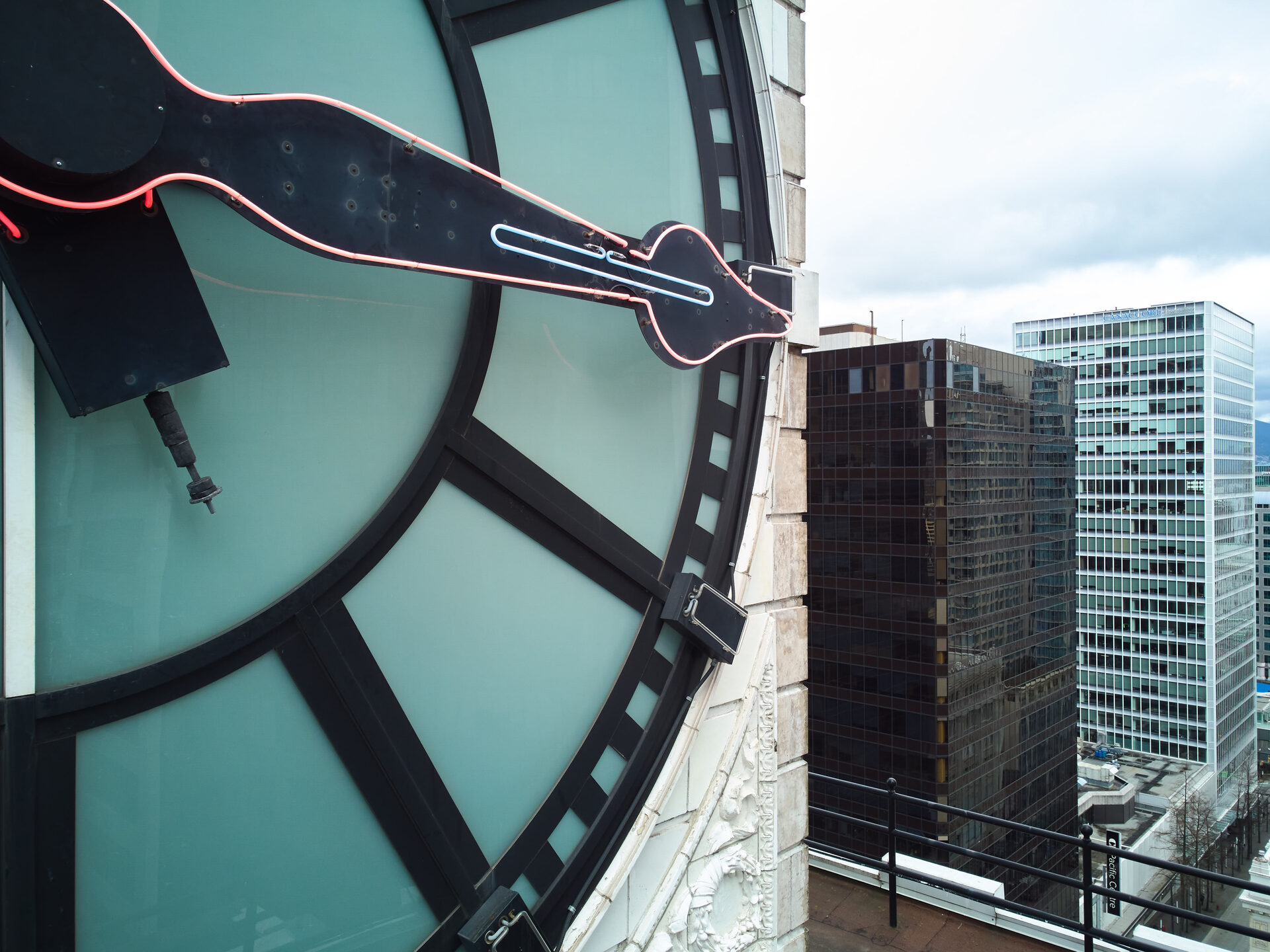
The Clock
Tower
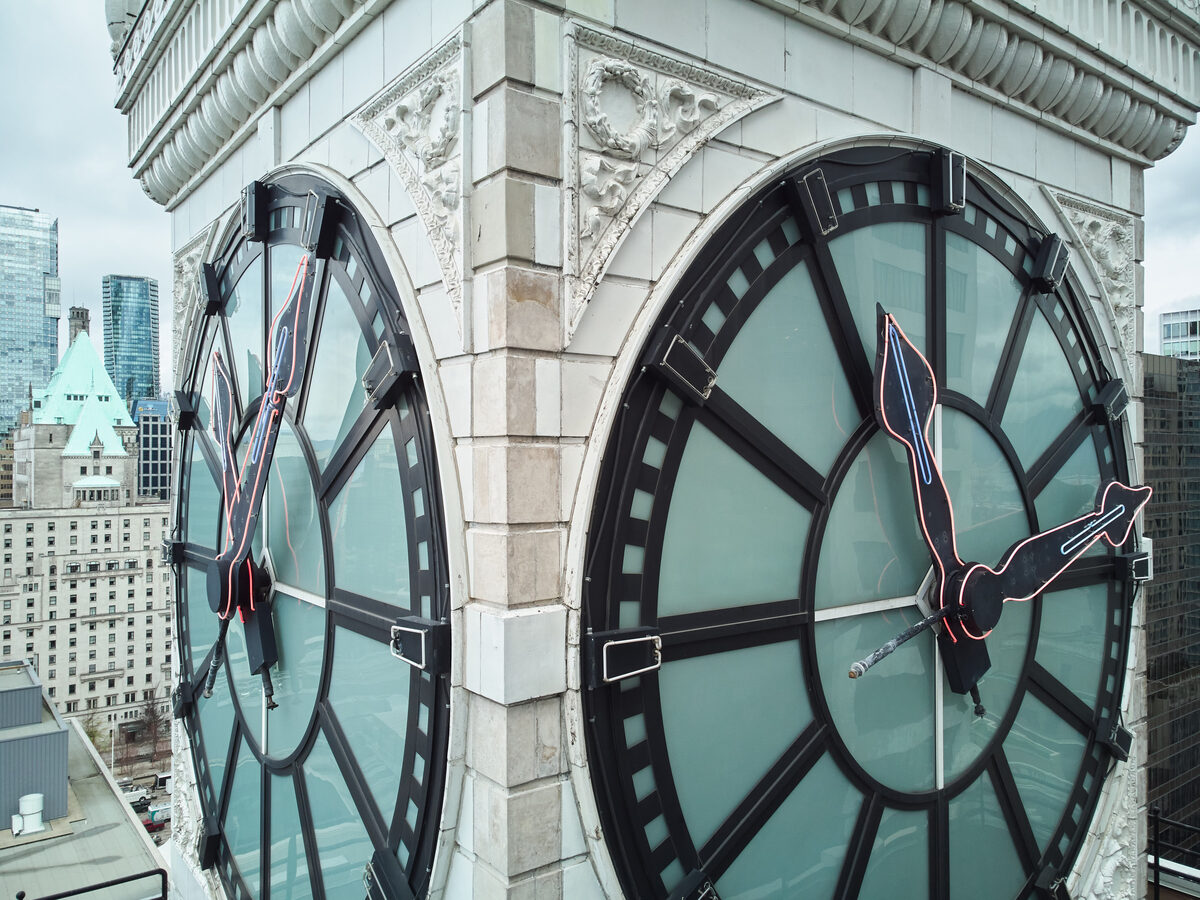
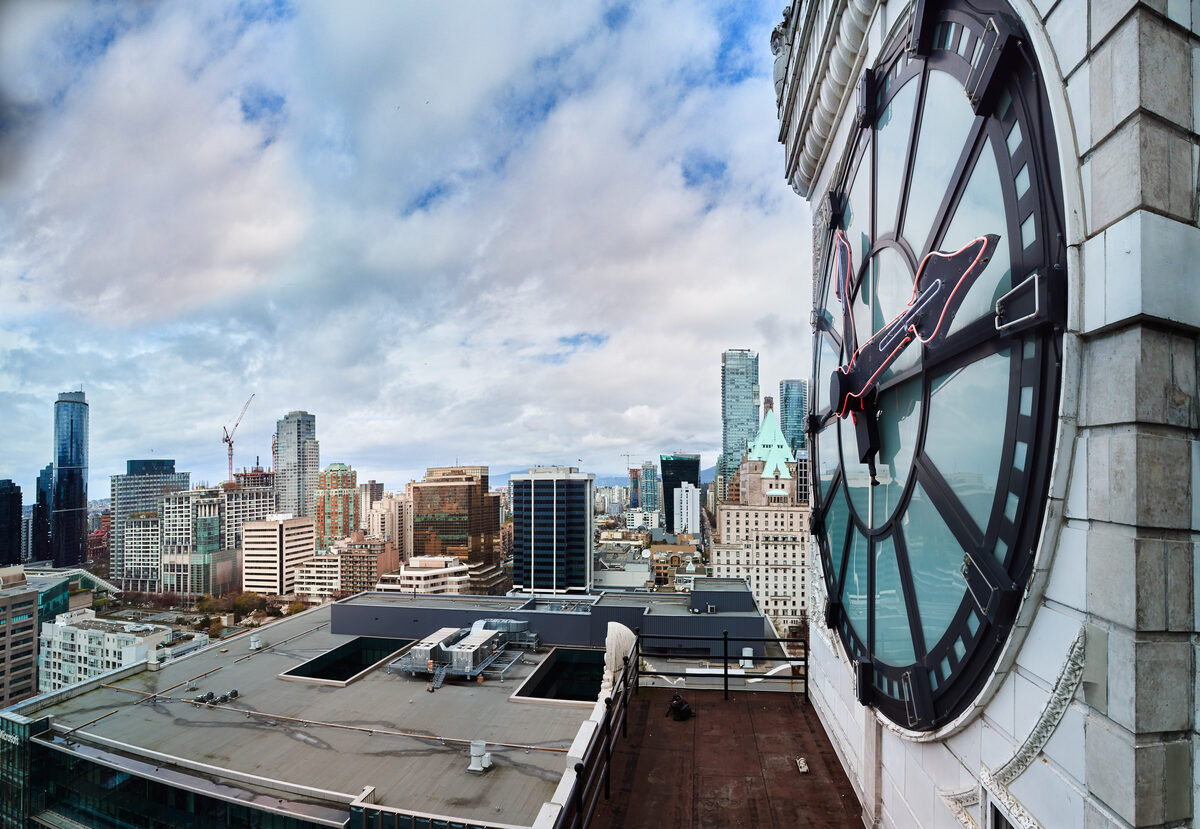
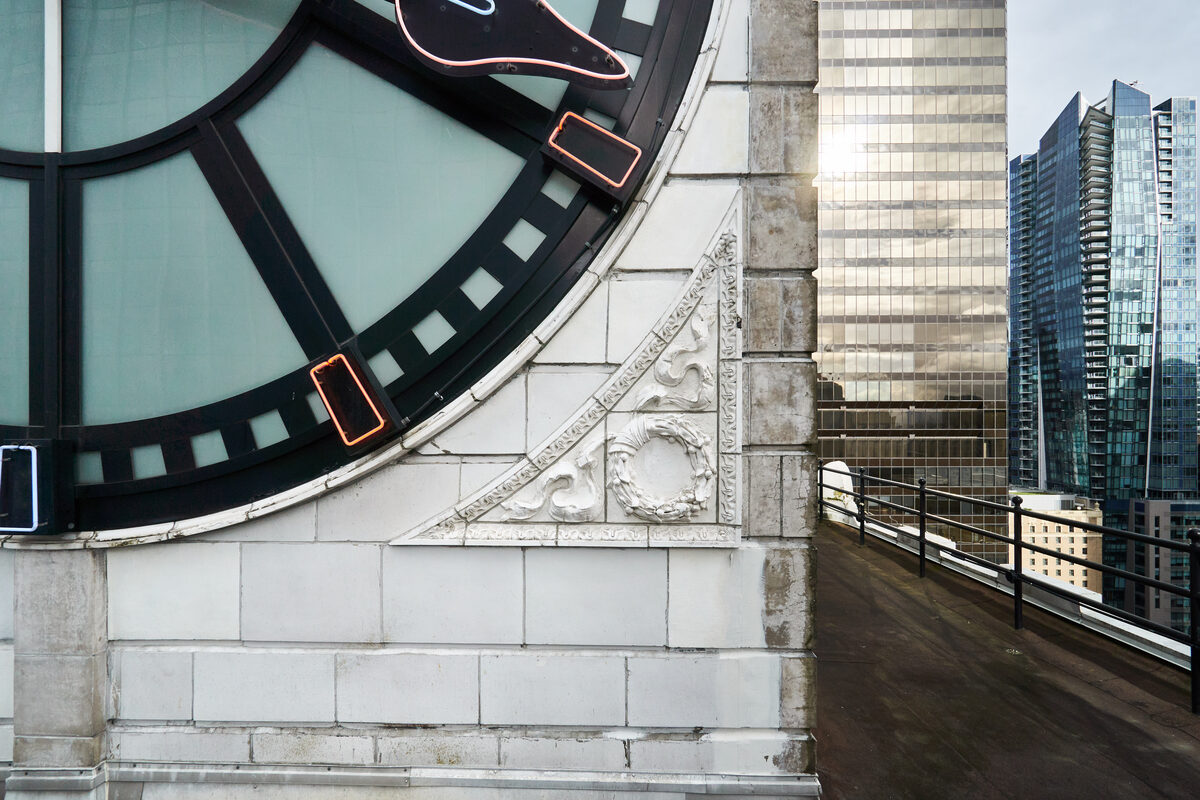
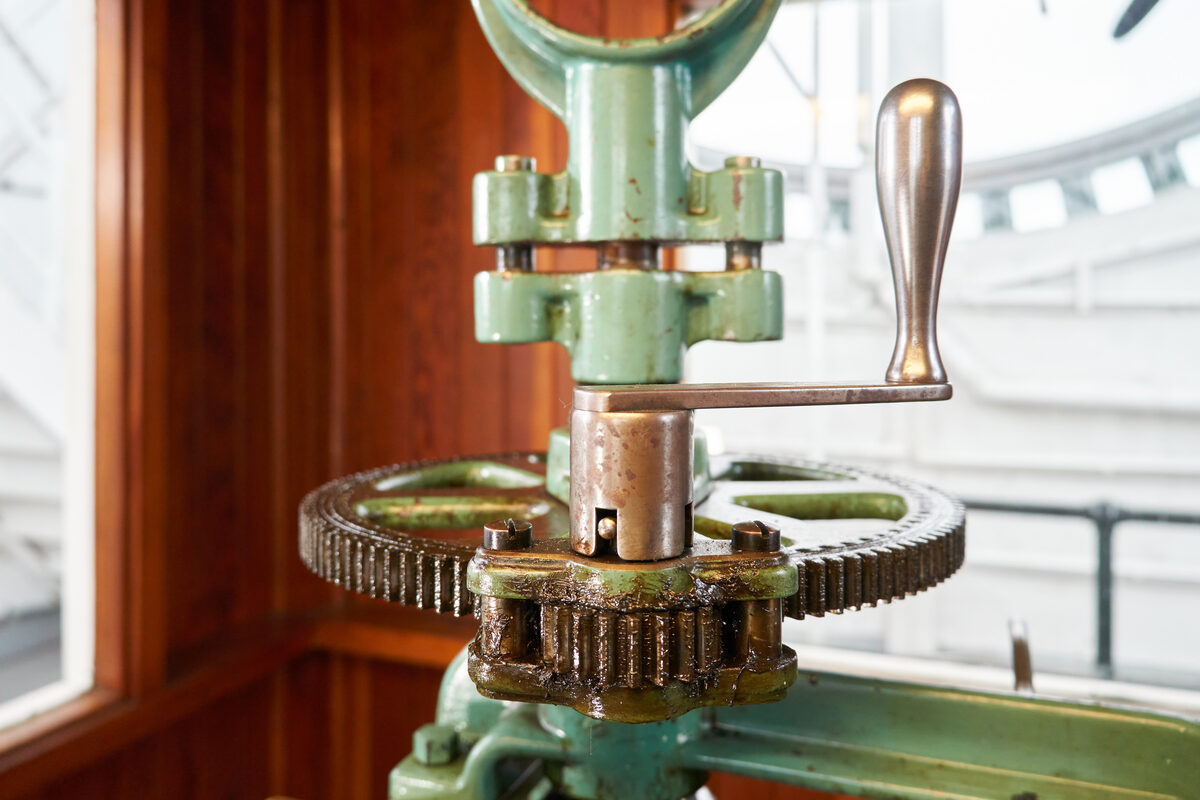
Since 1912, four illuminated faces have marked the hours above Granville Street — a civic interface between architecture and the life of the city.
An Urban Interface
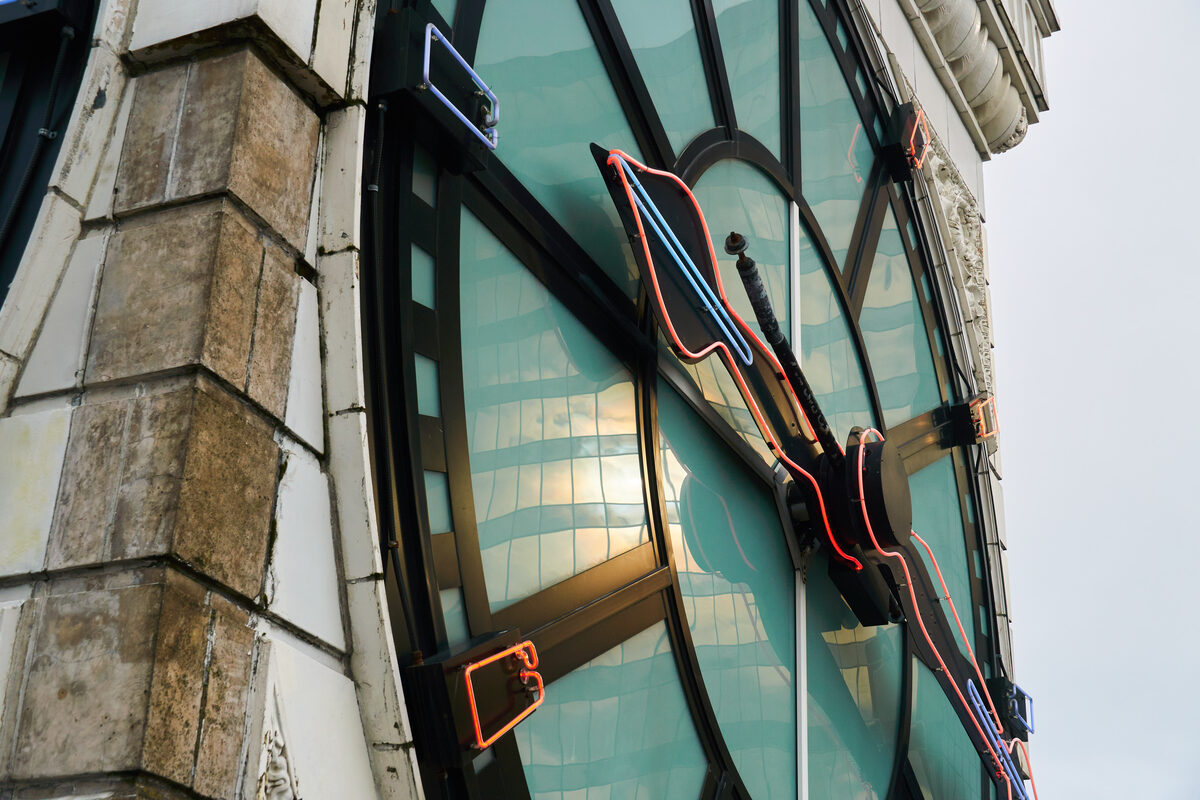
The clock tower did not simply tell time. It announced the building's presence on the skyline, oriented pedestrians along Granville Street, and — once electrified in the 1920s — joined the neon-lit visual culture that defined Vancouver's most important commercial corridor.
Four clock faces turned private enterprise into public infrastructure, giving the city a shared reference point visible from every direction. Rising above the commercial streetwall, the tower marked the building on the skyline and drew the eye upward from the sidewalk to the sky.
Neon illumination in the late 1920s transformed the tower into a nighttime beacon, connecting the building to Granville Street's culture of electric spectacle. The clock became an icon — a visible intersection of heritage and modernity that continues to define the building's public identity.
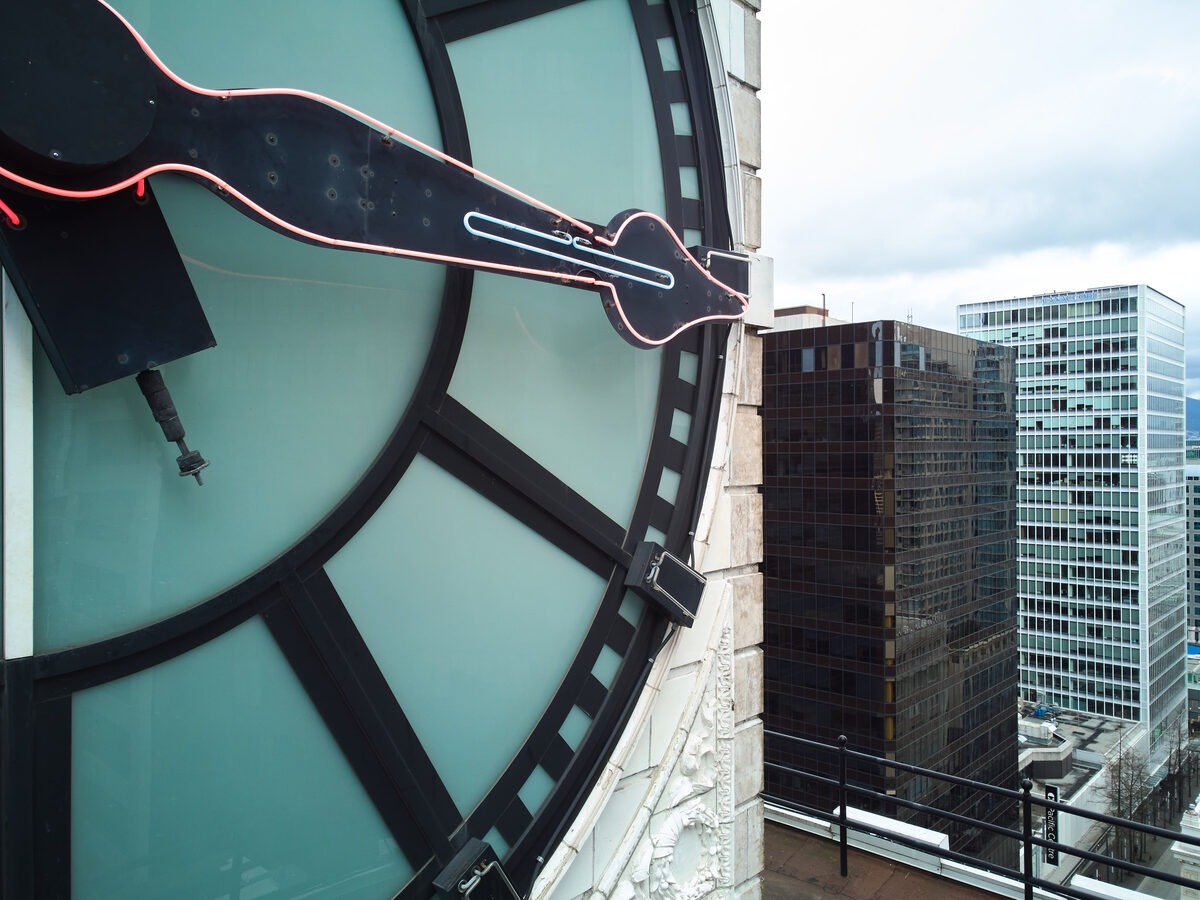
Neon Since the 1920s
Connecting the tower to Granville Street's electric culture.
Timeline
Key moments in the history of Vancouver Block and the city that built it.
Vancouver Incorporated
The City of Vancouver is incorporated, beginning its transformation from a small lumber town into a major Pacific port city.
The Railway Arrives
The Canadian Pacific Railway reaches Vancouver, connecting the young city to eastern markets and sparking a wave of investment and construction.
Dominion Building Begun
Construction begins on the Dominion Building, one of Vancouver's first skyscrapers, signalling the city's vertical ambitions.
Dominic Burns Commissions Vancouver Block
Meatpacking entrepreneur Dominic Burns commissions the architectural firm Parr & Fee to design a major commercial office building near Granville and Georgia Streets.
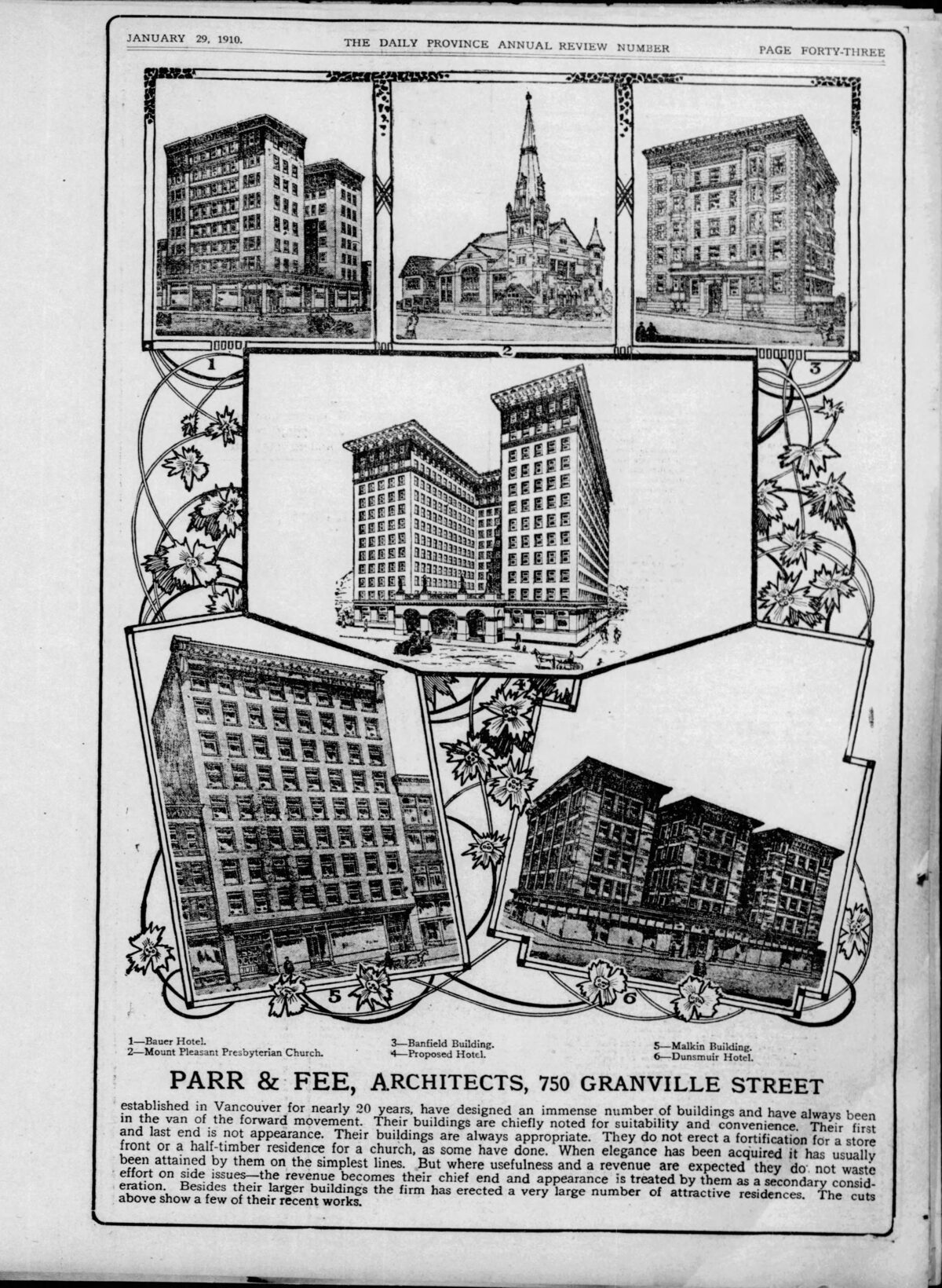
The Province, January 29, 1910
Building Permit Issued
The City of Vancouver issues a building permit for the Vancouver Block. Deep foundations are laid to support the fifteen-storey steel-framed structure.
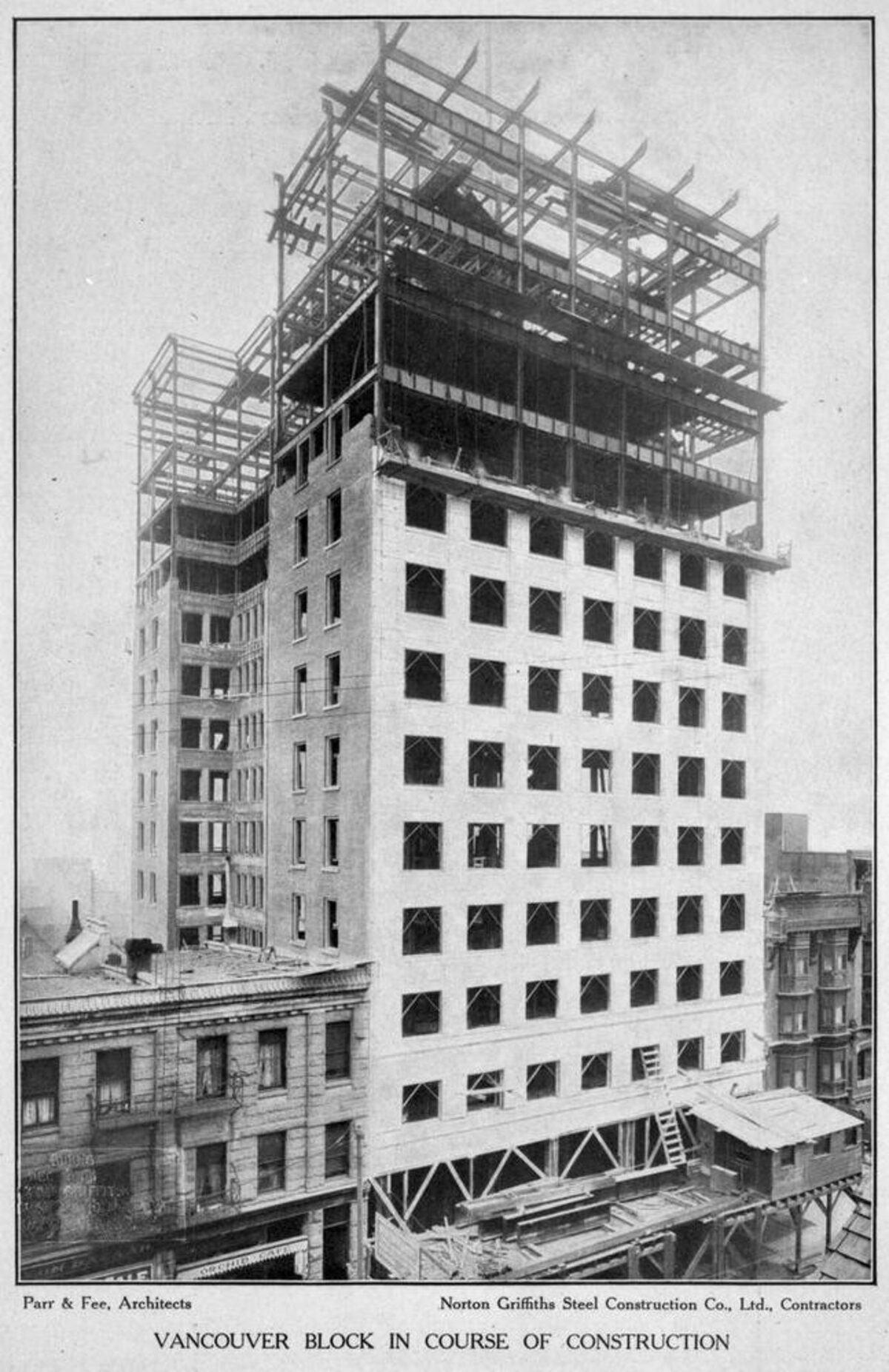
BC Royal Museum Archives
Vancouver Block Opens
Vancouver Block opens as one of the tallest and most prominent commercial buildings in the city, crowned by its distinctive four-faced clock tower.
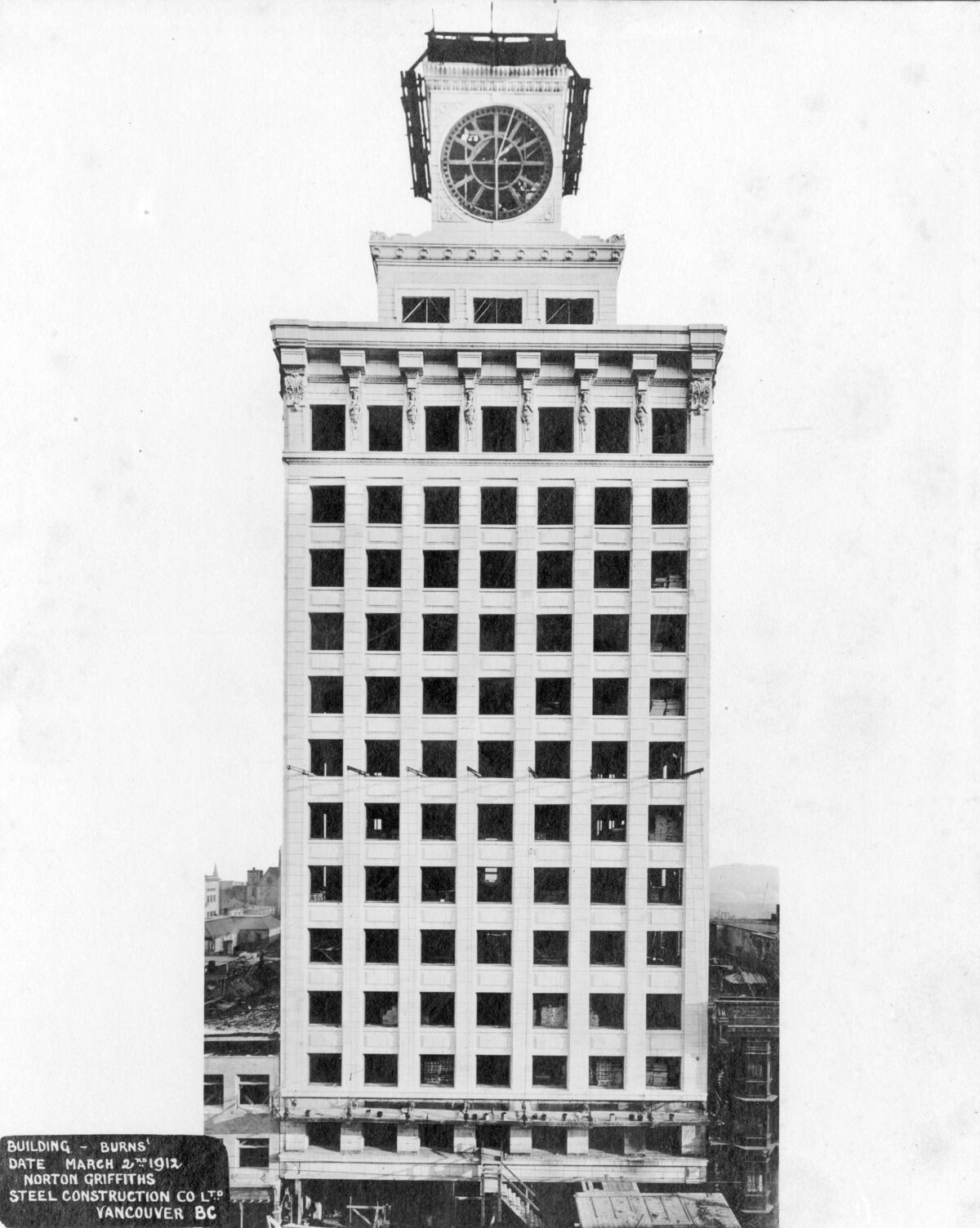
City of Vancouver Archives
Heritage Status
Protected
Heritage.
Vancouver Block is recognized at both the municipal and national level as a place of lasting historical and architectural significance.
Historic Structure Designation
City of Vancouver
Designated under the Vancouver Charter as a historic structure, formally recognizing its significance to the city's built heritage.
Class A Heritage Status
City of Vancouver Heritage Register
Classified as Class A on the Vancouver Heritage Register — the highest designation — affirming the building's exceptional architectural and historical value.
Canadian Register of Historic Places
Parks Canada / Federal-Provincial-Territorial
Listed on the Canadian Register of Historic Places, placing Vancouver Block among the country's formally recognized heritage structures.
Heritage designation does not freeze a building in time. It provides a framework for thoughtful stewardship — ensuring that the building's character-defining elements are preserved while allowing it to remain a functional, productive part of the city.
Vancouver Block is managed by Equitable Real Estate Investment Corp., which oversees its ongoing commercial operations and conservation care.
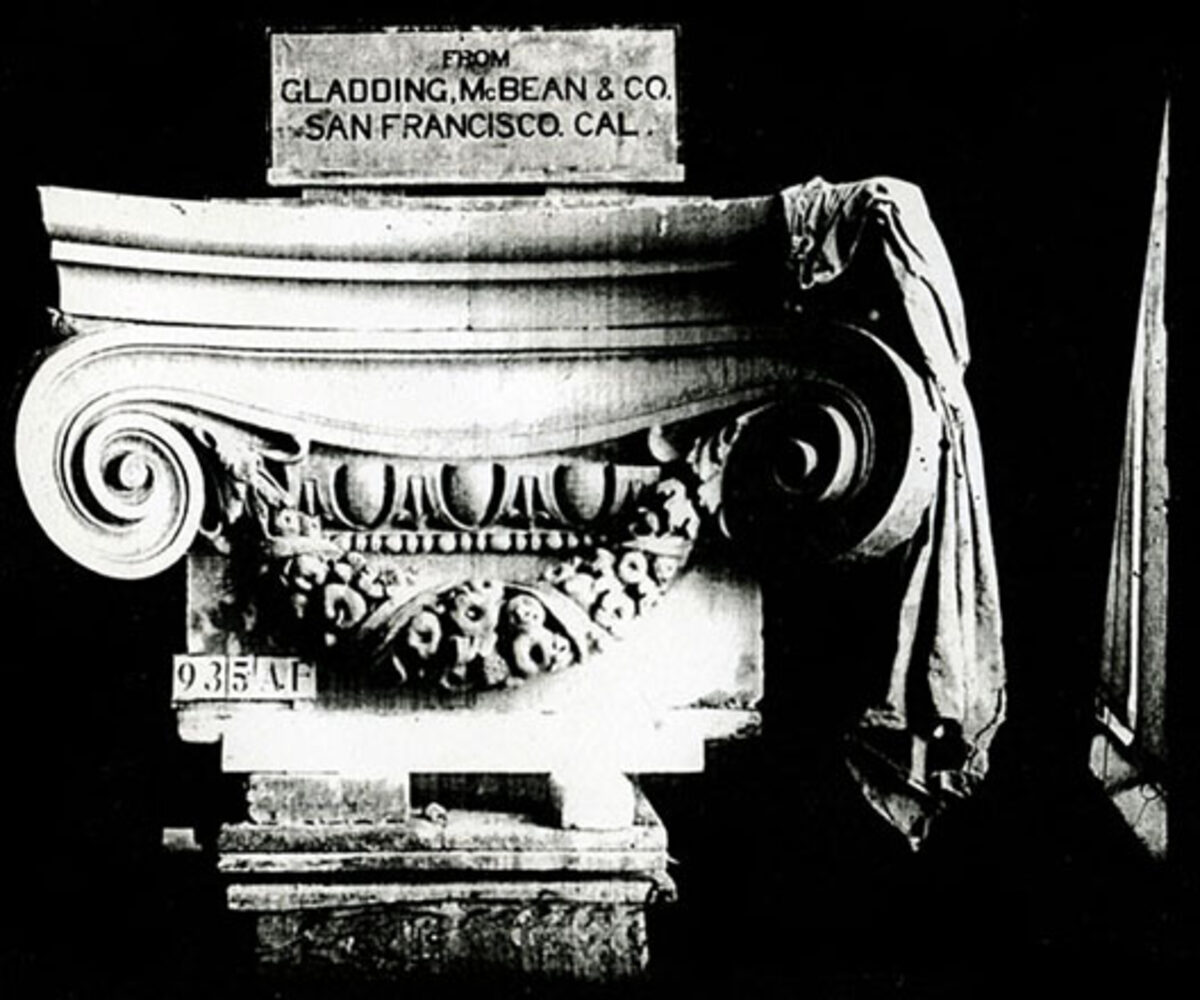
Protected Features
- Municipally designated historic structure
- Vancouver Heritage Register: Class A
- Canadian Register of Historic Places listed
- Restored lobby with original marble, terrazzo, and oak
- Maintained clock tower with four illuminated faces
- Ongoing conservation stewardship
Entrepreneurial Vancouver
Architecture as Enterprise
Vancouver Block was more than a building -- it was a visible bet on the future of a city.
In the early twentieth century, Vancouver was one of the fastest-growing cities in North America. The arrival of the Canadian Pacific Railway, the expansion of Pacific trade, and waves of immigration from across the world fuelled a construction boom that reshaped the city's skyline and streetscape within a single generation. Vancouver Block was born from that energy -- financed by industrial capital, designed to impress, and positioned at the commercial heart of a city that believed its best years were ahead.
Enterprise
The Burns Empire
Commerce
Granville Street Commerce
Capital
Pacific Trade & Investment
Learn
A Heritage Resource for Every Audience
Vancouver Block offers learning pathways for students, educators, heritage walkers, architecture enthusiasts, and history explorers.
Learning
Students
Classroom
Teachers
Walking Tours
Heritage Walkers
Design
Architecture Enthusiasts
Discovery
History Explorers
Stories
Community Members
Visit
See Vancouver
Block.
The best way to experience a heritage building is to stand in front of it.
736 Granville Street
Vancouver, BC V6Z 1A1
Corner of Granville & West Georgia
Weekday Building Hours
The public lobby may be accessible during regular building hours.
Special tours and heritage events organized periodically.
Granville SkyTrain Station
Steps from the station and multiple bus routes.
Heart of Vancouver's downtown commercial district.